A recent article by Joshua Geltzer and Lawrence Tribe on Politico discussed how President Trump's breach of the First Amendment's freedom of speech and freedom of the press will be addressed in a New York federal court next week. Geltzer and Tribe, with the assistance of other experts, filed a "friend-of-the-court brief" supporting individuals who accused Trump (through the judicial system) of violating their First Amendment rights.
Throughout his presidency (according to the article), he has been found to frame media "as enemies of the people" and uses viewpoint discrimination to create a disadvantage for individuals, groups, or media outlets that have portrayed him in a negative light. For example, he "stripped CNN reporter Jim Acosta of his White House press credentials in retaliation for his vigorous questioning."
As social media continues to be increasingly prominent in our society, not only for entertainment purposes, but for important discussions, President Trump's actions have had a monumental impact. "The legal dispute" that will be addressed in federal court next week is rooted in reports that President Trump's twitter account, @realDonaldTrump, has blocked other accounts who have posted negative information or comments about him. The authors of the article make the claim that, even though Twitter is a private entity, Trump is treating this platform as a public forum or "town hall," and therefore cannot exclude anyone based on their views or political positions.
This debate over the President's use of social media and his actions regarding the First Amendment are nowhere near over. As election season is getting closer, his actions and those of other politicians (both in public appearances and on social media) will no doubt have an impact on our views, and, potentially, the box we check on our ballot.
That's all for now!
Wednesday, March 20, 2019
Wednesday, March 6, 2019
SCOTUS: Power Based on Trust
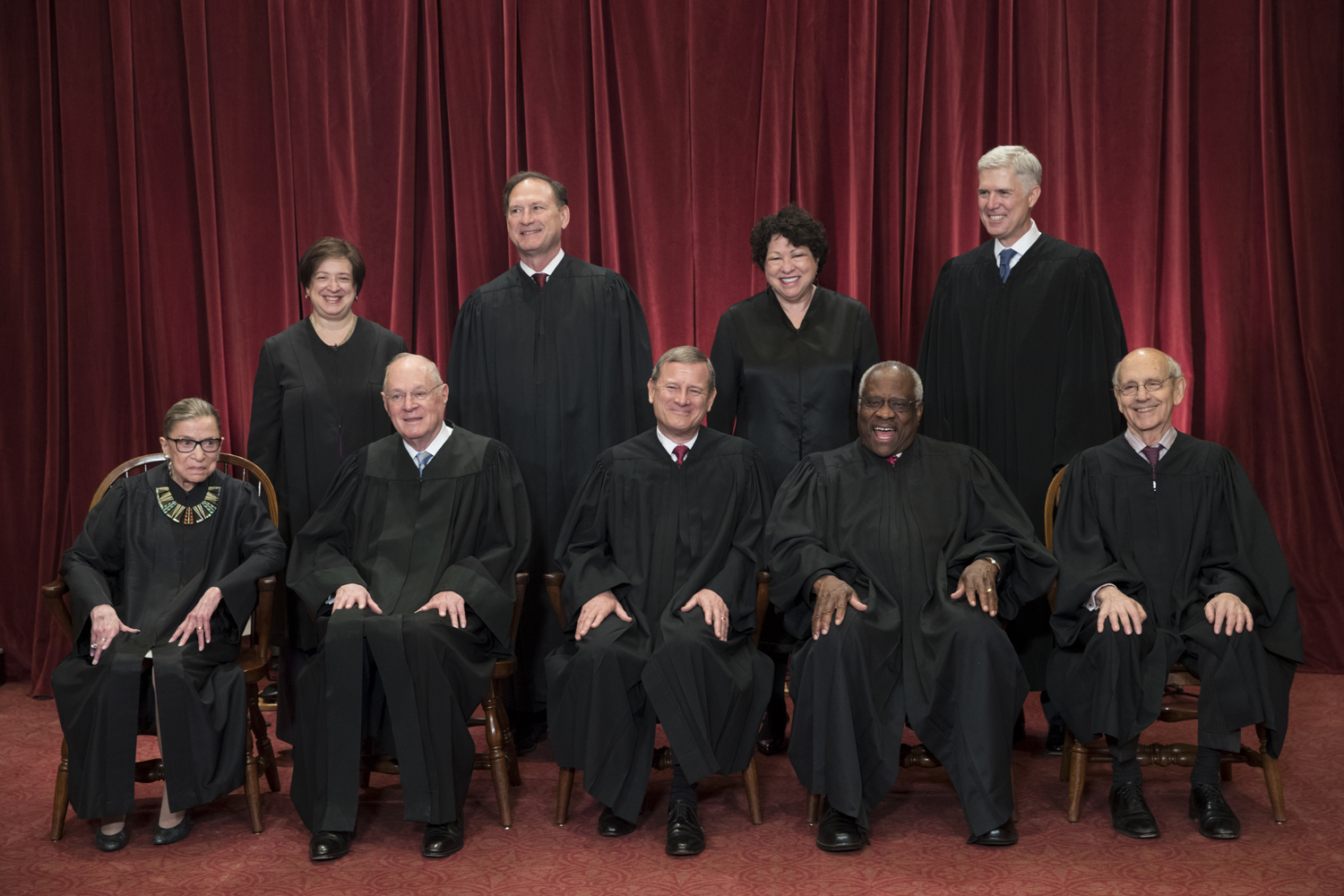
The Supreme Court of the United States (SCOTUS) is arguably the most powerful court in the world because of the trust invested in the court by the American people. As the Supreme Court video viewed in my Media Law and Literacy course noted, an unspoken contract is signed between SCOTUS and the citizens that they will obey SCOTUS' decisions in order to keep our nation the freest in the world.
This trust from the American people puts great responsibility in the justices' hands. The justices believe professionalism to be crucial, and focus on maintaining a strong professional nature among them at all times. For example, before every conference, each justice shakes every other justices' hands. In order to fulfill their responsibility to the public to the fullest, SCOTUS remains extremely private, as all of their deliberations and decisions are conducted with only the 9 justices in the room, without any additional staff or record keepers.
In a world that is constantly changing, SCOTUS remains true to a document over 200 years old: our Constitution. In the Supreme Court video, Justice Ginsburg notes how simple yet important phrases such as 'We the People' has incorporated more and more people than in the original constitutional meaning. Another individual mentions how the 14th Amendment has essentially become the 2nd bill of rights because of its integral part in how our contemporary society operates.
Overall, the power of SCOTUS rests in public faith. This trust results in great responsibility, especially in an ever-changing society founded upon the beautifully crafted words of the Constitution.
That's all for now!
This trust from the American people puts great responsibility in the justices' hands. The justices believe professionalism to be crucial, and focus on maintaining a strong professional nature among them at all times. For example, before every conference, each justice shakes every other justices' hands. In order to fulfill their responsibility to the public to the fullest, SCOTUS remains extremely private, as all of their deliberations and decisions are conducted with only the 9 justices in the room, without any additional staff or record keepers.

In a world that is constantly changing, SCOTUS remains true to a document over 200 years old: our Constitution. In the Supreme Court video, Justice Ginsburg notes how simple yet important phrases such as 'We the People' has incorporated more and more people than in the original constitutional meaning. Another individual mentions how the 14th Amendment has essentially become the 2nd bill of rights because of its integral part in how our contemporary society operates.
Overall, the power of SCOTUS rests in public faith. This trust results in great responsibility, especially in an ever-changing society founded upon the beautifully crafted words of the Constitution.
That's all for now!
Wednesday, February 27, 2019
TV and the First Amendment?
A recent SCOTUS Case, Manhattan Community Access Corporation v. Halleck, brought up an important issue on where the lines in the sand are drawn regarding First Amendment rights (according to an article in The Economist). A producer and playwright stated that they were being discriminated against by the Manhattan Community Access Corp, who runs a public-cable network in New York (Manhattan Neighborhood Network). The MNN attempted to ban Ms. Helleck and Mrs. Melenez (producer and playwright represented in the case) from the network for putting a critical and controversial piece titled "The 1% Visit El Barrio" on the air.
Conflict ensued as Helleck claimed that, because the MNN is a public network, they are required to uphold everyone's freedom of speech equally. On the other hand, MNN claimed that they are not a "state actor," and therefore do not have to do so.

This conflict of public versus private and how that corresponds to the First Amendment is something that transcends just public television. As the article mentions, these ideas can transfer into our discussions about social media platforms and more. In any case, this SCOTUS case will perhaps set a precedent for future First Amendment debates.
That's all for now!
That's all for now!
Wednesday, February 20, 2019
Chief Justice as First Amendment Defender?
When we think of First Amendment controversies, we generally point our attention to the judicial branch, specifically the Supreme Court (SCOTUS). The Supreme Court's decisions regarding the First Amendment set major precedents to how we view relationships between the government and citizens (specifically journalists and media outlets). Last week, Tony Mauro reported in the National Law Journal that Chief Justice Roberts announced himself as the "most aggressive defender" of the First Amendment.
Bold statements such as this one causes us to reflect on how the First Amendment may differ significantly in interpretation among individuals, even Supreme Court Justices. What does Chief Justice Roberts mean by calling himself the "most aggressive defender," and I wonder if he is focusing on his attention towards freedoms of speech and press over other important aspects of the First Amendment. As the article notes, perhaps this idea could be a step in the right direction towards bipartisan collaboration and less hostility between both ends of the political spectrum. On the other hand, our interpretations of this amendment may divide SCOTUS, politicians, and citizens as a whole, even further.
That's all for now!

That's all for now!
Friday, February 15, 2019
Communication at Work
When we first think of apps that we use in our daily lives, it's easy to think of socializing and fun, whether it be playing Candy Crush, searching for the latest trending YouTube videos, or FaceTiming with friends. However, apps are continuing to become a critical tool in the workplace as well. Forbes shares a response to a question about the future of the workplace on Quora by Slack Co-founder Cal Henderson.
Slack is a professional texting app, where your various committees, teams, and other groups each have a separate channel in an easy-to-access panel on the app. This app allows for quick communication and increased productivity among members or a company or organization. Henderson believed that Slack, a professional texting-type app, and other apps of the like, will be how employees develop key communication and collaboration skills. I personally use Slack for a professional leadership development group that I preside over--the Ohio 4-H Teen Leadership Council. The Slack app has helped us tremendously in our organization, time-management, and collaboration skills. I am excited to see how the communication tools in the workplace continue to develop as I begin my professional life as well as how we can be more productive in the ways that we share information. I think that a large variety of companies and organizations could benefit from efficient yet professional communication among members.
That's all for now!
Thursday, February 14, 2019
NYPD v. Google--A First Amendment Controversy

"Police reported ahead." A simple phrase that has ensued a debate between the NYPD and Google over its GPS/navigation app--Waze. Not only does Waze help guide you from point A to point B, but it can notify you when you should be more careful on the road if police are nearby, especially if you could potentially receive a DWI charge. As an article from Above the Law.com mentions, the app does not specify an officer's identity or provide any details, but just reads the short phrase mentioned above.
The NYPD has most definitely taken notice and demanded that Google's app should disable this function. Given that the first amendment grants us the right to free speech, and that the information is "publicly available," the app should indeed be free to share that information with its users. What the future will hold for this debate will be interesting...will the government deny first amendment rights to Google or will Google be the ones who give a lesson about the right to free speech to the public?
That's all for now!
That's all for now!
Wednesday, February 6, 2019
Privacy Pitfall

We tend to think of our electronic devices as an extension of our personal space. A space to hold memorable photos, gossip with friends over the phone, and scroll through social media timelines. In our day to day life, we don't normally worry about protecting these conversations or memories on our "personal spaces" because we feel like we constantly have control over them. However, as we have seen in the recent news, the private spaces that technology provides are not as private as we think.
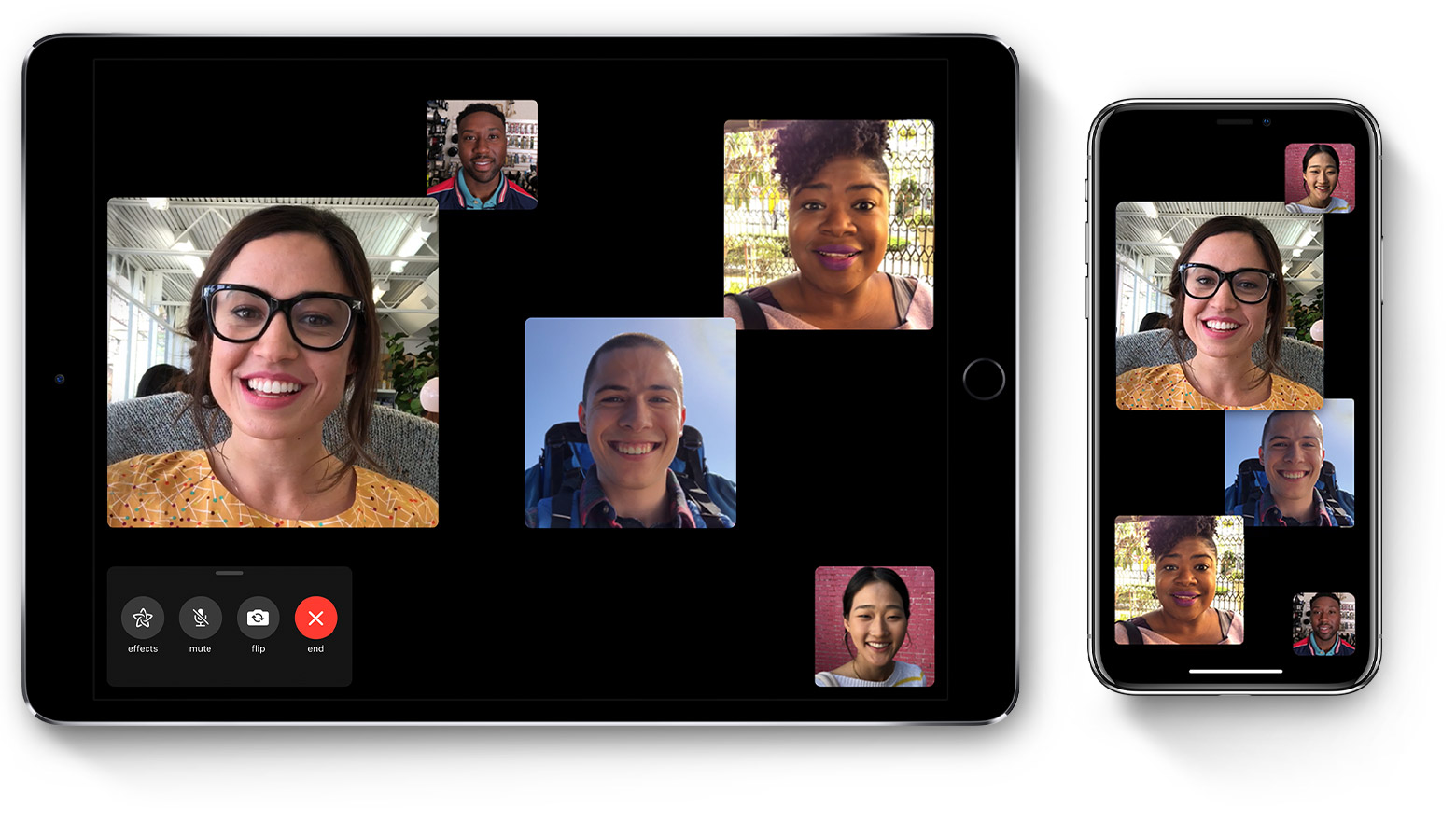
In fact, Apple just apologized for a large privacy issue with its app, FaceTime. An article by CNBC mentioned that, before coming to the attention of a 14-year-old and his family, the group FaceTime function had a bug that could eavesdrop on other people, even if they did not answer and were not connected to the FaceTime call. This bug made it extremely easy to see and hear others by utilizing the phone's mic and camera, violating privacy at a high level.
This incident and others like it make us think about the true power of technology and how our private information isn't really so "private." We'll have to continue to be proactive in seeking out these controversial, technology-based cases to have a better understanding of how they affect our daily lives and communication.
That's all for now!
Subscribe to:
Posts (Atom)